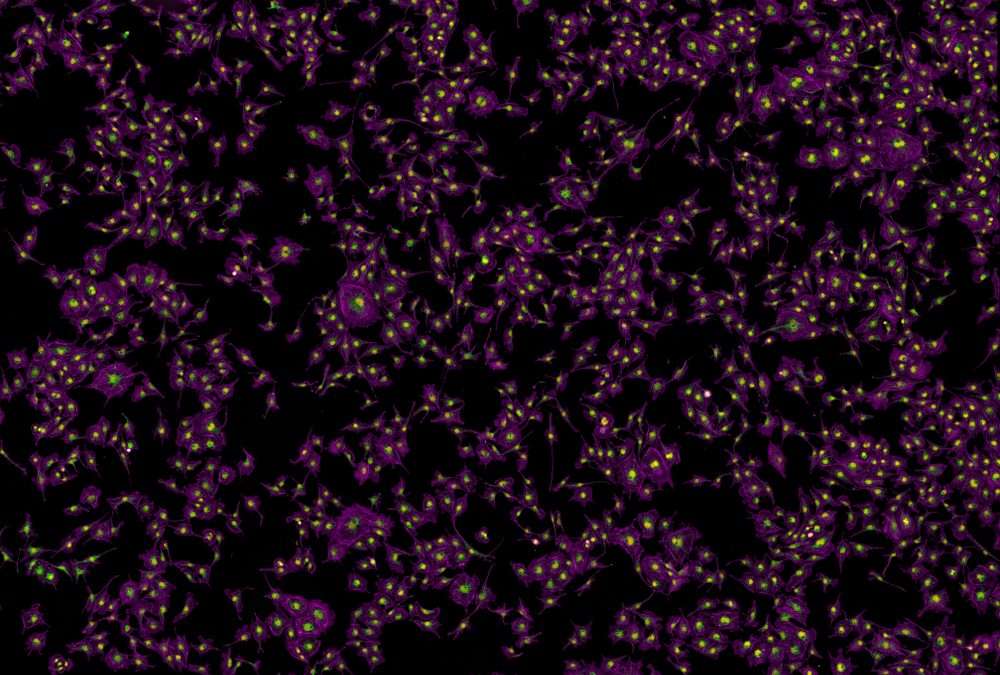
Repurposing the CRISPR-Cas system for imaging genomic targets in living cells Established methods for cell imaging use fluorophore-labeled antibodies or oligonucleotides to bind proteins or nucleic acids in fixed cells or rely on the engineered expression of...
Compensation is one of the most important but least understood aspects of multicolor flow cytometry Multicolor flow cytometry allows researchers to characterize complex cellular populations by staining for several cell type specific markers at the same time. However,...
Advantages of TSA include increased sensitivity, simplified panel design, and faster time to results Tyramide signal amplification (TSA), also known as catalyzed reporter deposition (CARD) or tyramine amplification technique (TAT), is a method used for detecting...
Flow cytometry continues to evolve with advances in instrumentation, reagents, and software The first fluorescence-based flow cytometer was developed in 1968 and was commercialized the following year. Since then, the field of flow cytometry has matured rapidly, and...
Studying calcium flux leads to insights into normal physiology and disease Calcium ions (Ca2+) are involved in numerous intracellular signaling cascades and in a broad range of physiological processes. These include neurotransmission, muscle contraction, and hormone...
Marker selection and panel design underpin the accuracy of cellular identification Being able to monitor the presence and relative abundance of different cell types in sample material is essential to understand normal biology and investigate the pathogenesis of...